
7 Signs Your Gutters Need Cleaning (Roseville)
The short answer: If water spills over your gutters during rain, you can see debris from the ground, your gutters are sagging, or plants are growing in the trough, your gutters need cleaning. Stains on the siding, pests around the roofline, and dry downspouts during a storm are three more red flags. Spot any of these and book a cleaning before Roseville’s winter rains arrive.
Most homeowners in Roseville never think about their gutters until something goes wrong. That is normal. Gutters sit out of sight, and when they work, you never notice them. But here is the problem: by the time most people notice a gutter issue, the clog has been building for months.
Roseville makes this worse. Our blue oaks drop leaves from August through mid-November, valley oaks shed in November, and ponderosa pines drop needles all fall. Then the winter rains start — about 90% of California’s precipitation falls between October and April, and the first storms often arrive as October or November atmospheric rivers. Six or seven dry months turn your gutters into leaf storage. The first big storm turns that dry mat into a dam within minutes, and that is when the damage starts. If you are not sure what to look for, start with a professional gutter cleaning for your Roseville home — a full cleanout plus inspection catches problems early.
Here are the seven signs of clogged gutters, from most urgent to least. Every one of them can be spotted from the ground — no ladder needed. If you spot even one, do not wait for the rainy season.
1. Is Water Spilling Over the Edges During Rain?
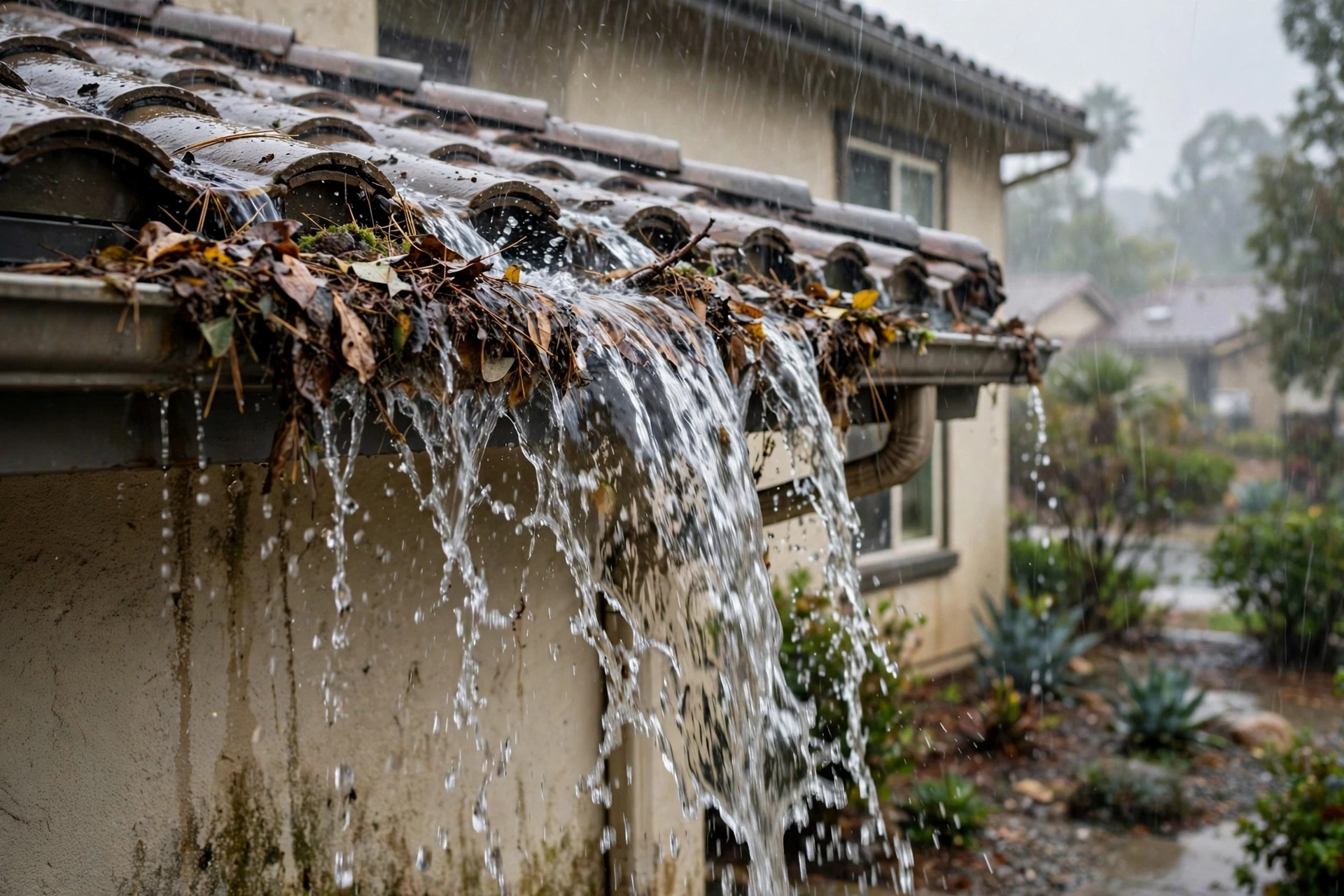
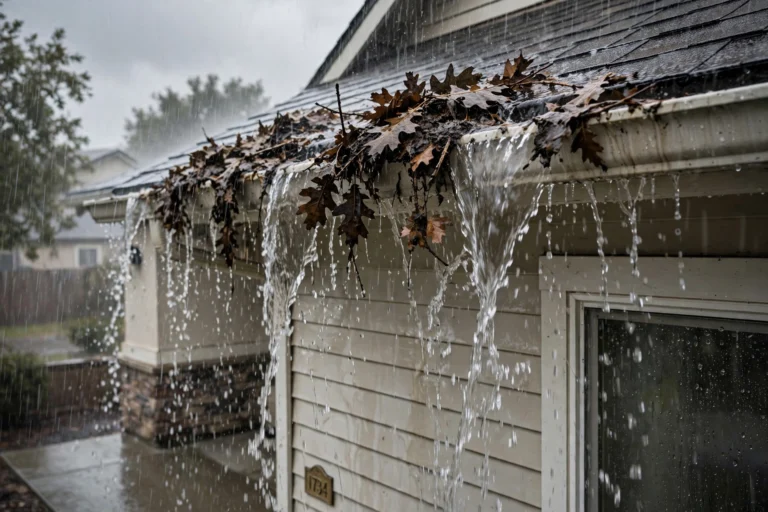
This is the number one sign your gutters are clogged. When gutters are clean, rainwater flows into the trough, runs to the downspout, and drains away from your home. When they are full of leaves and sludge, the water has nowhere to go. It spills over the front edge like a waterfall.
Here is how to check: during the next rain, step outside and look up. You do not need to get on a ladder. If water pours over the sides instead of running quietly through the downspouts, your gutters are blocked.
Overflow is urgent because that spilled water lands right against your foundation and landscaping. Over time it erodes soil, soaks the foundation, and rots the fascia boards behind the gutter. This matters more in Roseville than most places: the city’s own environmental reports document shrink-swell clay soils under many neighborhoods. That clay expands when soaked and shrinks as it dries, so repeated soaking from an overflowing gutter stresses the foundation a little more with every storm. A gutter that overflows in October will be a much bigger problem by January.
2. Are Your Gutters Sagging or Pulling Away From the House?
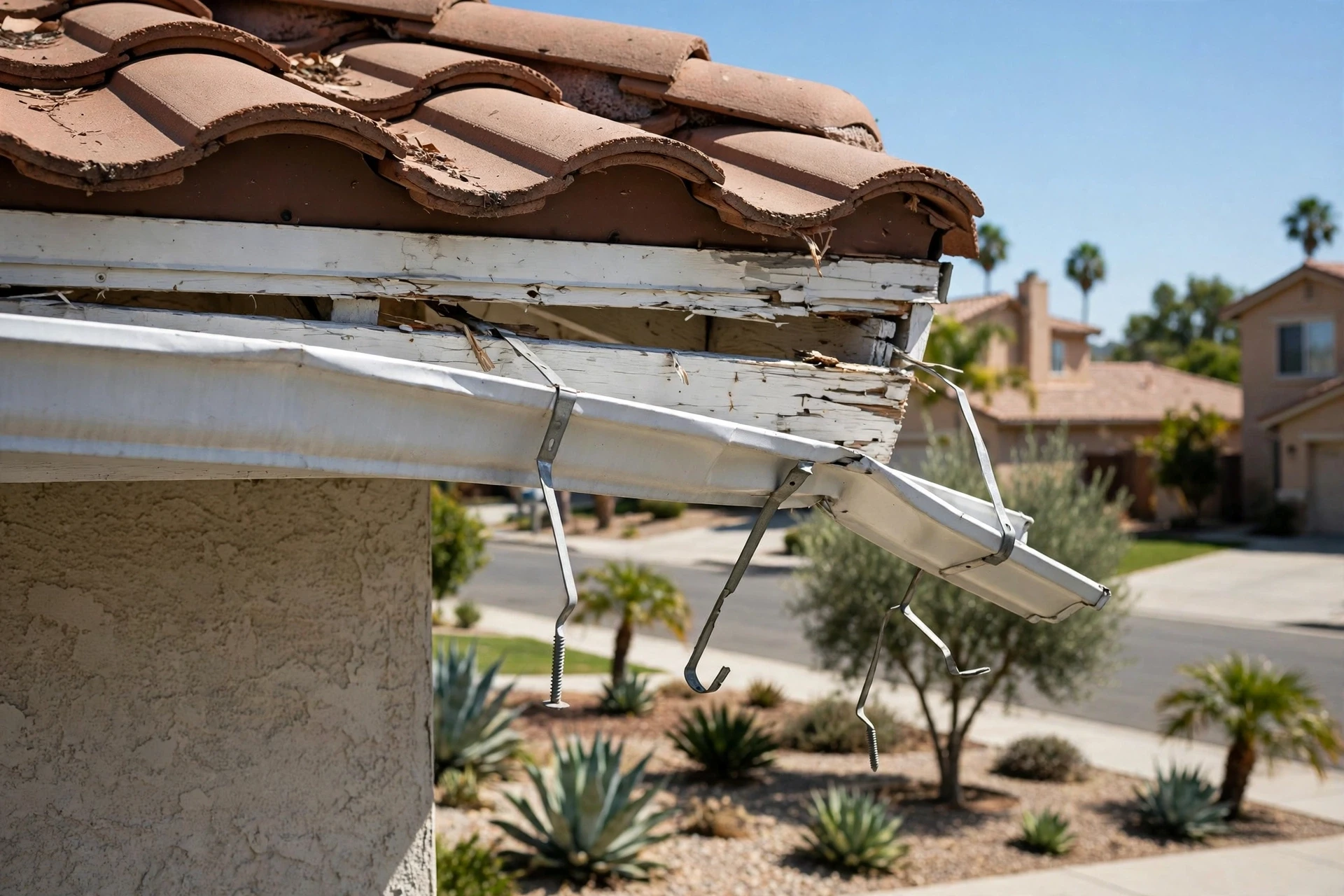
Stand back from your home and look at the gutter line. It should be straight and tight against the fascia board. If you see a section dipping in the middle, tilting forward, or pulling away from the house, the gutter is overloaded.
Wet leaves and compacted debris are heavy — far heavier than most people expect. A ten-foot section of clogged gutter can hold dozens of pounds of wet muck. That weight bends the hangers and pulls the gutter away from the fascia. Once it sags, water pools in the low spot instead of flowing to the downspout, which makes the clog worse.
Sagging also breaks the seal where the gutter meets the fascia. Water gets behind it and rots the wood. Replacing rotted fascia costs many times more than a cleaning.
3. Are Plants or Weeds Growing in the Trough?
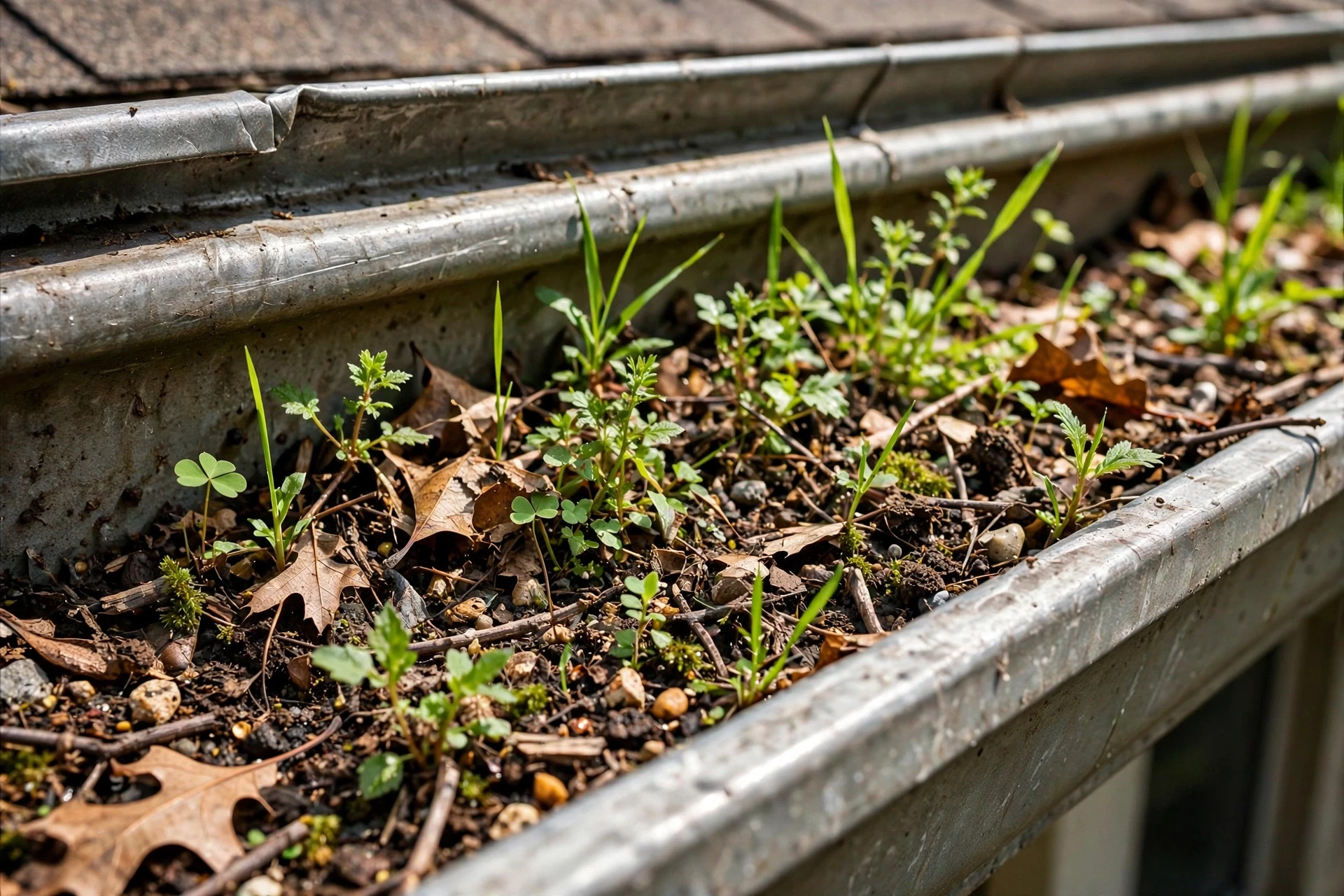
If you can see green sprouts sticking up out of your gutters, you are looking at one of the clearest signs of a long-neglected clog. Seeds blow in from nearby trees — and in Roseville, with our oak canopy, that happens fast. The trapped leaves and dirt in the trough act like potting soil. Add a little rain and you have a rooftop garden.
Plants in the gutter mean the clog has been there long enough for soil to form. Roots grow into the seams and downspout openings, which makes the blockage harder to clear. They can also lift the gutter seams and cause leaks.
This one is easy to spot from the ground. If you see anything green above the gutter line, book a cleaning — the clog underneath is worse than it looks.
4. Can You See Debris From the Ground?
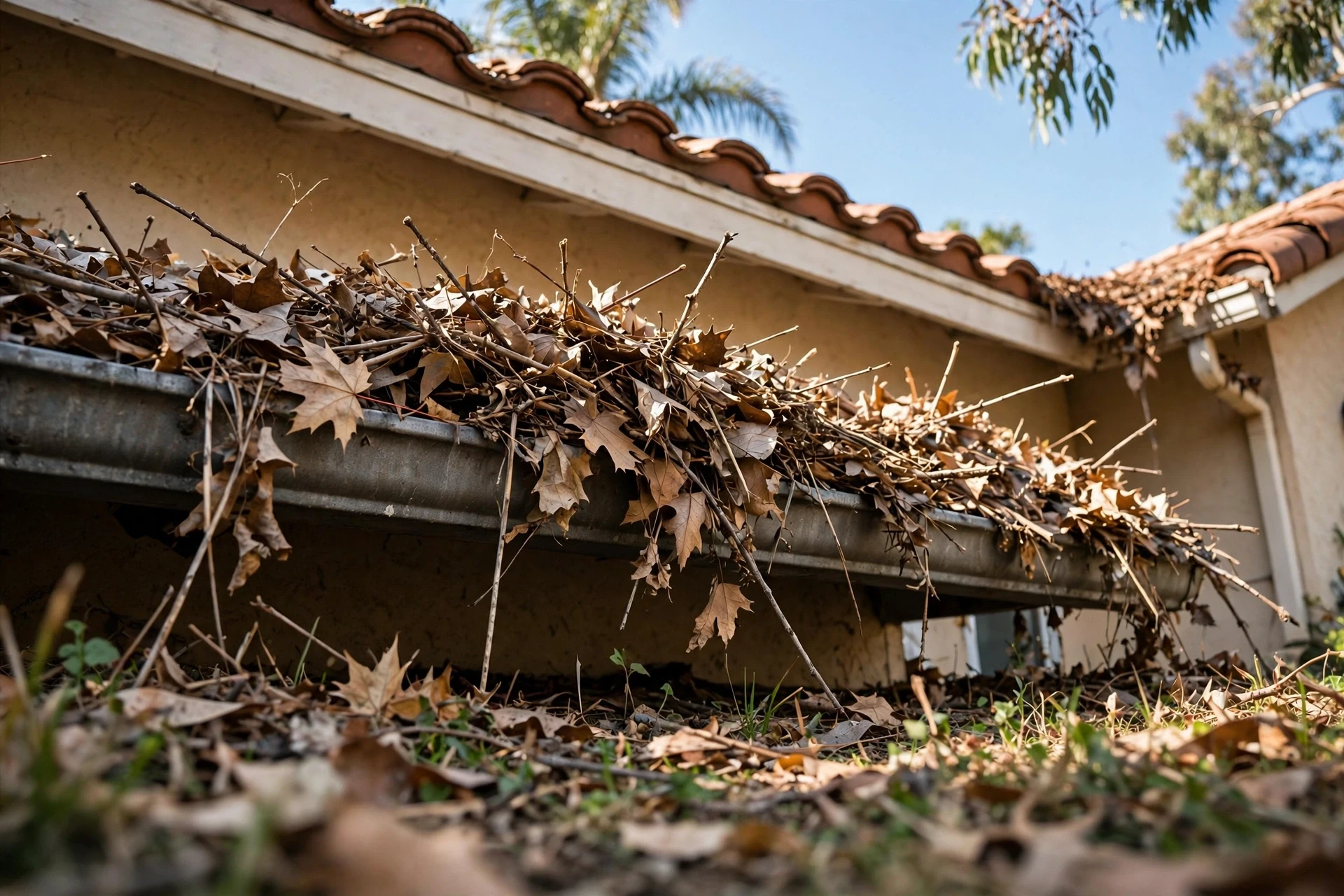
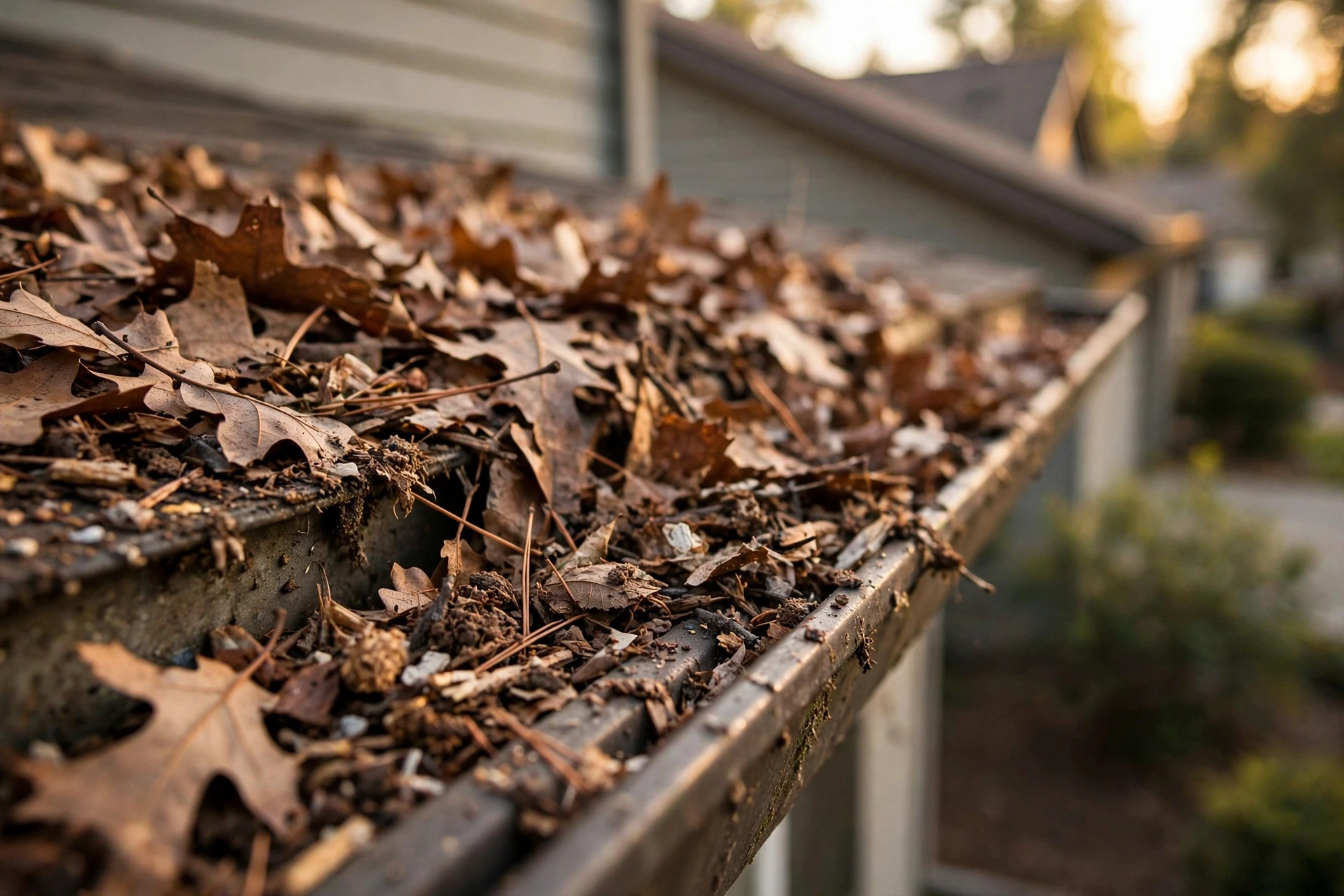
You should not be able to see the inside of your gutters from the street. If leaves, twigs, or pine needles are piled high enough to be visible from your driveway, the trough is full.
This is especially common under oak and pine trees. Blue oaks drop steadily through fall, valley oaks shed in November, and ponderosa pines shed needles year-round. A home under either can fill its gutters in a single season. Homes near Maidu or Royer Park, where the oak canopy is thick, fill fastest.
Visible debris is your early warning. It means the gutter still works, barely — but one good storm will pack that loose debris into a solid plug. Clean it out now while it is still loose and easy to remove.
5. Are There Stains on Your Siding or Fascia Boards?
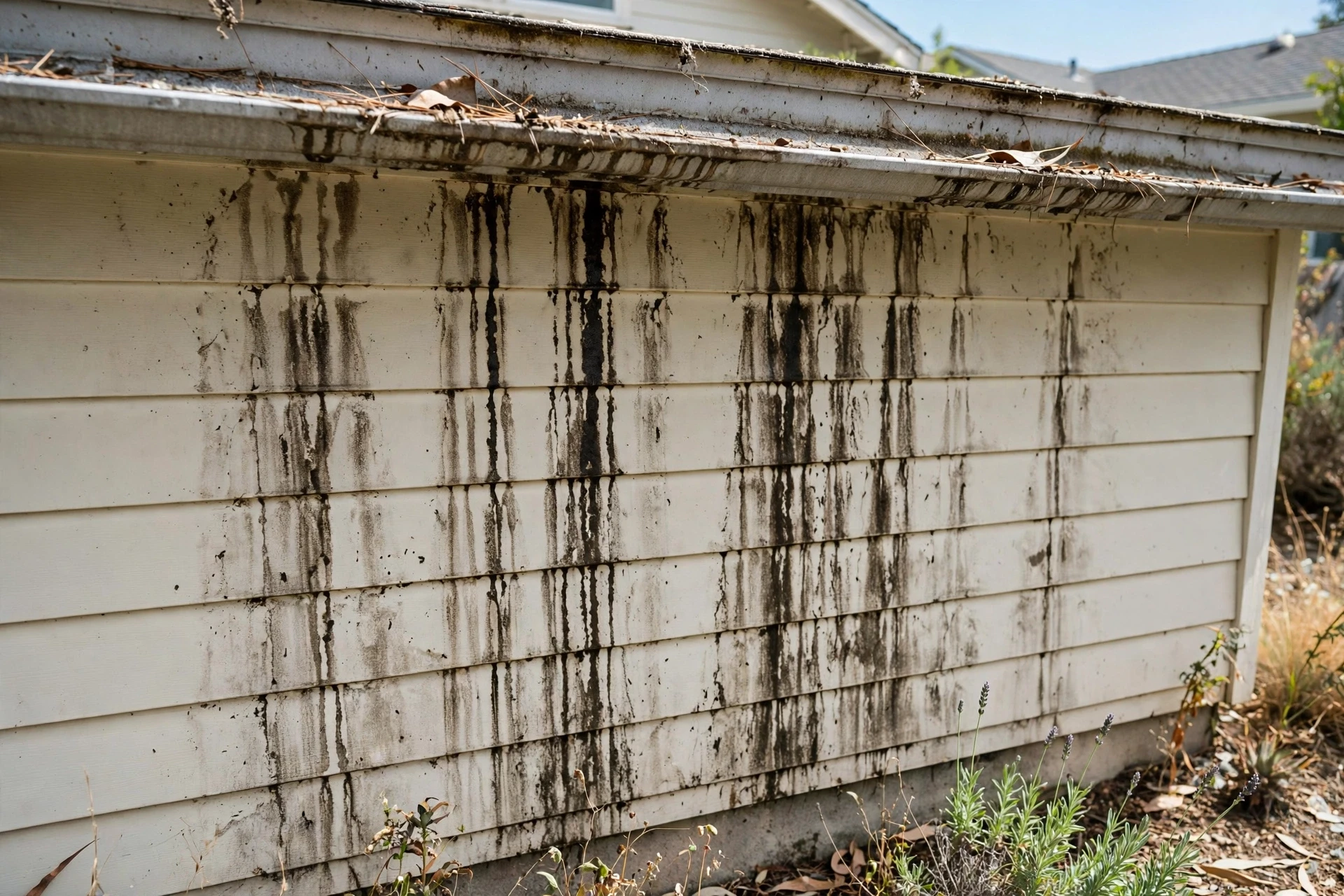
Look at the siding directly below your gutters. Clean runoff leaves no mark. But when gutters clog and overflow, the water carries dirt, tannin from oak leaves, and algae down the side of the house. That leaves dark vertical streaks — sometimes called “tiger stripes” — on the siding and fascia.
Stains tell you two things. First, the overflow has been happening for a while — one storm does not stain. Second, water has been running where it should not. Check the wood behind the gutter too. If the fascia board is soft, discolored, or peeling paint, water has been getting behind the gutter, and rot may have started.
Stains are cosmetic, but what causes them is not. They are proof that water is escaping the gutter system and going somewhere it does not belong.
6. Are There Pests, Birds, or Mosquitoes Around the Roofline?
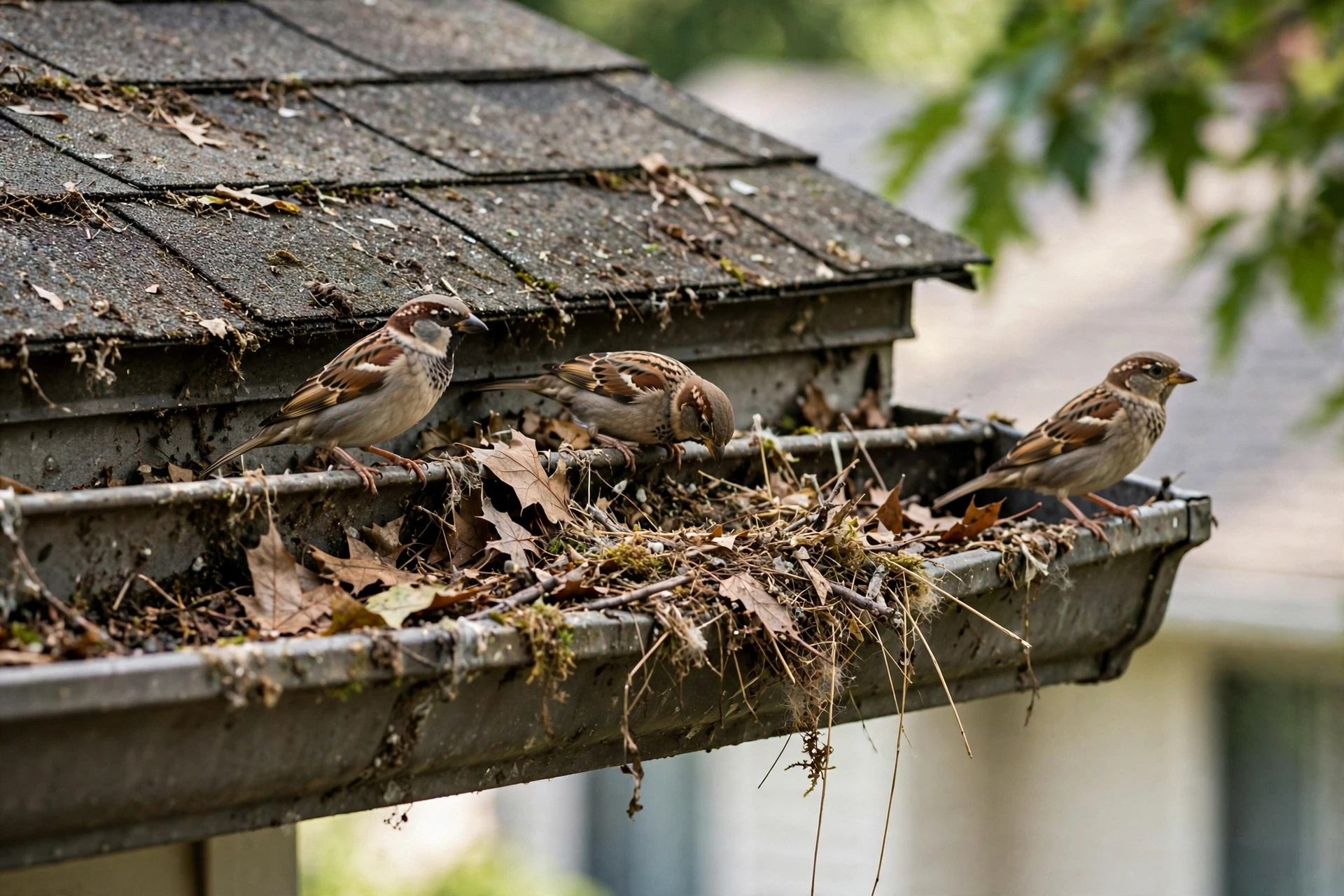
Clogged gutters are prime real estate for pests. Standing water in the trough breeds mosquitoes — a real nuisance in Roseville’s warm fall. The damp debris attracts insects, which attract birds. Birds build nests in the clog, and squirrels follow.
Once animals move in, the problem compounds. Nests block the downspouts completely. Droppings add to the sludge. And some pests chew through the fascia to get into the attic.
If you notice more mosquito bites than usual near the house, birds landing on your gutters regularly, or buzzing insects around the roofline, check the gutters. The standing water up there is likely the reason.
7. Is Little or No Water Coming Out of the Downspouts?
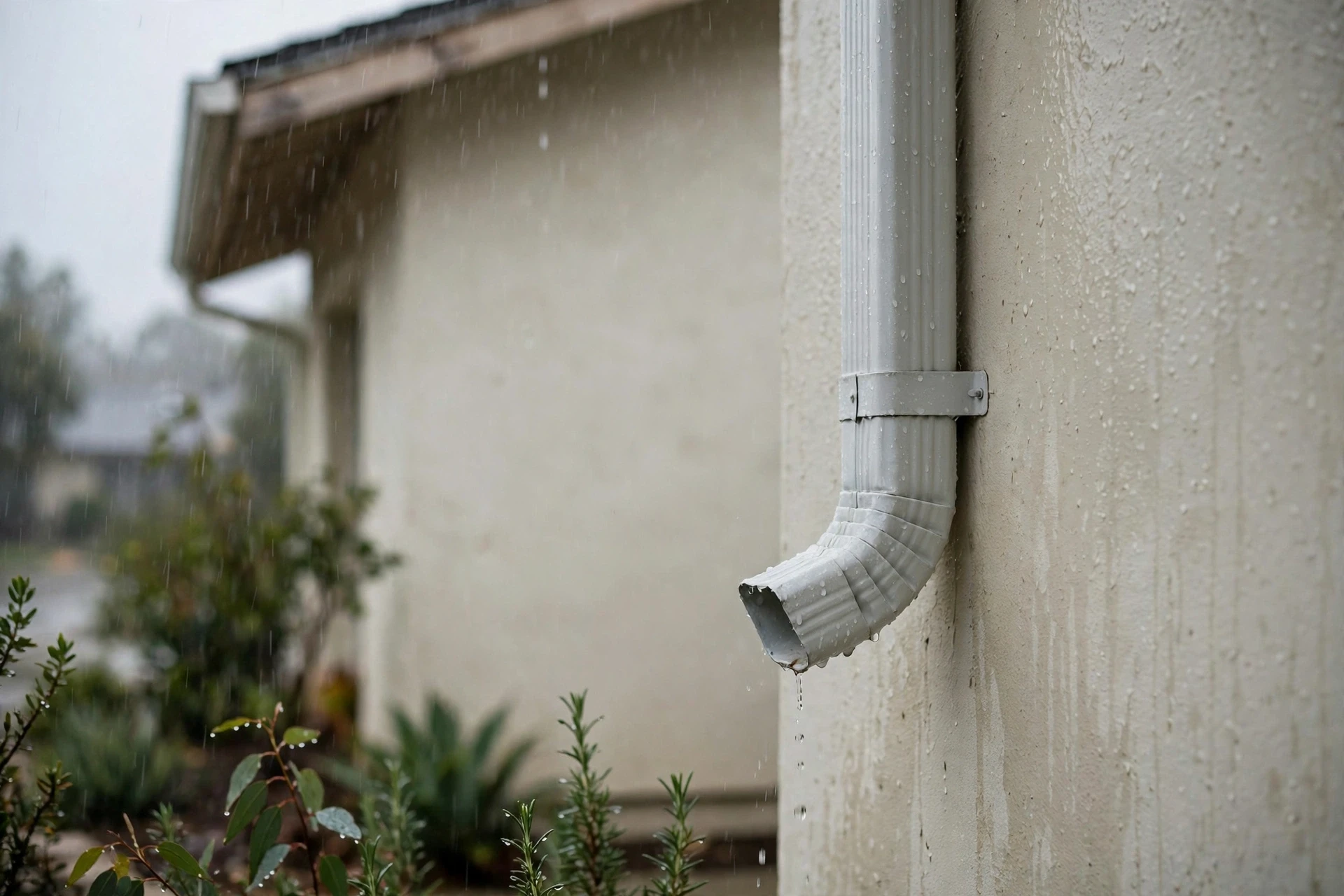
This is the sneakiest sign. During a rainstorm, your downspouts should be flowing steadily — that is where all the roof water is supposed to exit. If it is raining hard and a downspout is dry or barely dripping, the clog is in the downspout itself or at the elbow where it meets the gutter.
Downspout clogs are easy to miss because everything looks fine from the front. The gutter may not even overflow — the water just sits in the trough with nowhere to go. That standing water adds weight, breeds mosquitoes, and eventually finds its way behind the fascia.
Next time it rains, walk around the house and check each downspout. Any dry one during a downpour needs attention.
Sign, Meaning, and Urgency at a Glance
| Sign | What It Means | How Urgent |
|---|---|---|
| Water spilling over edges | Trough is fully blocked | Act now — foundation and fascia at risk |
| Sagging or pulling away | Clog weight is damaging the gutter | Act now — rot and detachment follow |
| Plants growing in the trough | Clog has been there for months | Soon — roots damage seams |
| Debris visible from the ground | Trough is full but still draining | Soon — one storm from a full plug |
| Stains on siding or fascia | Overflow has been happening a while | Soon — check for wood rot |
| Pests or mosquitoes at the roofline | Standing water in the trough | Soon — nests block downspouts |
| Dry downspouts during rain | Clog in the downspout or elbow | Soon — hidden standing water |
What To Do When You Spot These Signs
One sign is enough to act on. Here is what we recommend:
- Do not wait for the rainy season. The best time to clean gutters in Roseville is late October to early November, before the winter rains start. A clog you fix now is a repair bill you avoid in January. If your home sits under oaks, plan a second check in December — oaks drop a second wave of leaves in November and December. Read our local cleaning calendar to time it right.
- Do not ignore it until “later.” Every one of these signs gets worse with the next storm. Wet debris gets heavier, stains spread, and standing water finds new places to go. If you see these signs, here’s what happens if you ignore them.
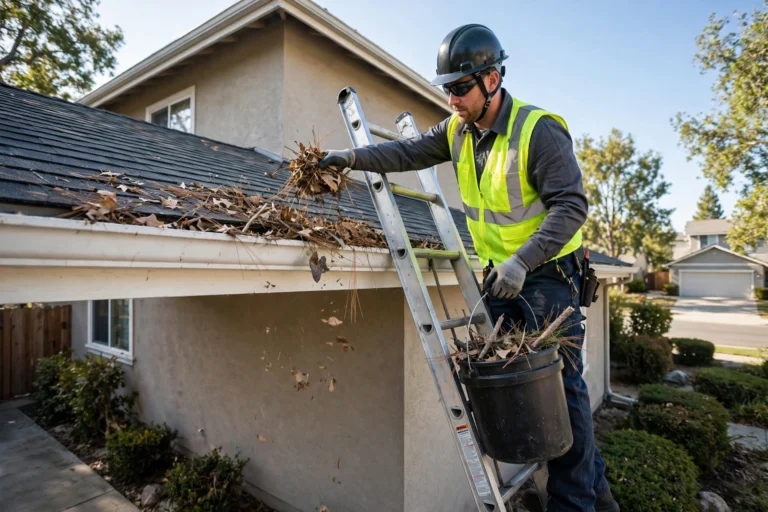
- Get a professional cleanout. A proper cleaning clears the trough, flushes the downspouts, and includes an inspection of hangers, seams, and fascia. Most Roseville homes land in the $150–$250 range for a single-story cleanout — far less than fascia or foundation repairs. See our gutter cleaning cost guide for exact pricing factors.
Spotted one of these signs? Get a free gutter inspection.
Call (279) 212-2922 — we serve Roseville and the surrounding Placer County neighborhoods. A professional gutter cleaning takes about an hour and can save you thousands in water damage.
Frequently Asked Questions
How do I know if my gutters need cleaning without climbing a ladder?
You do not need a ladder for any of the seven signs above. Walk around your home during or right after rain and look up: water spilling over the edges, sagging sections, plants in the trough, debris visible from the driveway, stains on the siding, pests at the roofline, or a downspout that stays dry during a downpour. Every one of these is visible from the ground.
Can clogged gutters cause water damage?
Yes. When gutters clog, water overflows and lands against your foundation, erodes landscaping, rots fascia boards, and can back up under shingles into the attic. In Roseville, the first heavy winter storm after months of dry debris buildup is when most of this damage happens.
How much does gutter cleaning cost in Roseville?
Most single-story Roseville homes cost $150–$250 per cleaning. Two-story homes run higher because of ladder work and safety requirements. The exact price depends on linear footage, debris buildup, and roof access. Our cost guide breaks down every pricing factor.
How often should gutters be cleaned in Roseville?
Most Roseville homes need cleaning twice a year — once in late fall before the winter rains, and once in spring. Homes under oak or pine trees may need more: oak-adjacent homes typically need two or more cleanings per year, and pine-adjacent homes up to four, since pines shed needles year-round.