
What Happens When You Never Clean Your Gutters
The short answer: Nothing bad happens for a season or two — then the damage starts stacking. Overflow soaks the fascia, rots the wood holding your gutters, pools water at the foundation, and sooner or later the repair bill lands in the thousands. This article walks through that chain in order, so you can see where your home sits on it — and what stopping it early actually costs.
The Timeline of Neglect
Gutter damage doesn’t arrive all at once. It builds in stages, and each stage is more expensive than the last:
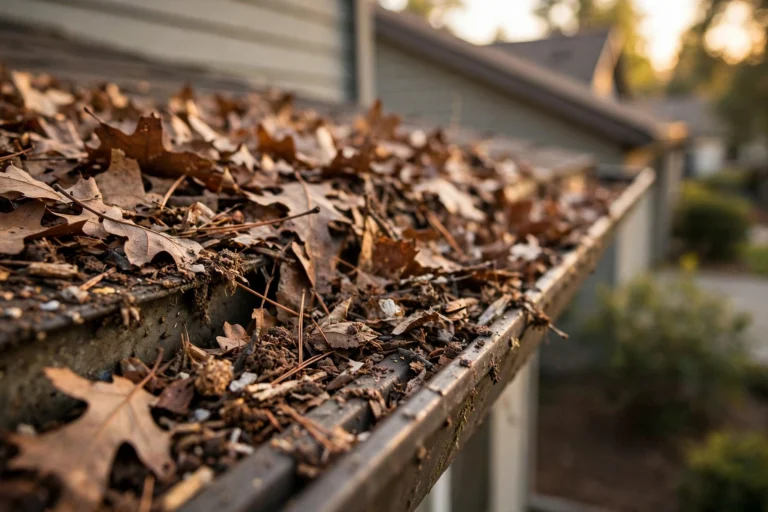
Months 1–6: the quiet stage. Leaves and pine needles pile up. Rain starts spilling over the edge instead of running through the downspouts. You’ll see dark stains on the siding and maybe a strip of mud splashed against the foundation. The house looks a little rougher, but nothing feels broken yet.
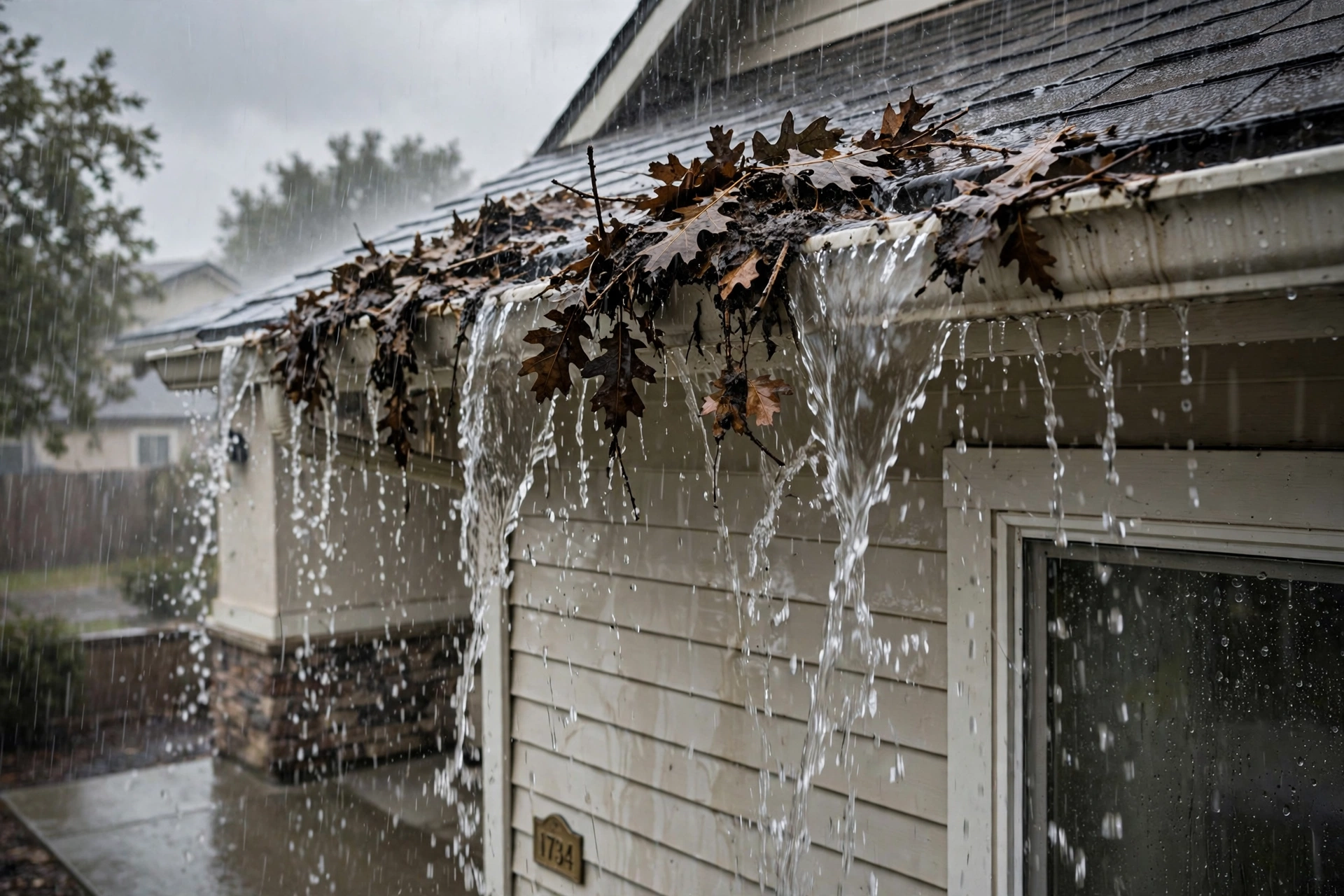
Years 1–2: the visible stage. Water sitting against the wood softens the fascia boards. Gutters start to sag under the weight of wet debris. Mosquitoes breed in the standing water, and ants and rodents move into the damp corners. Paint peels, the gutter line pulls away from the roof in spots, and a heavy rain now sends a sheet of water down the wall.
Years 3 and beyond: the expensive stage. Saturated soil presses against the foundation and, in Roseville’s freeze-thaw winters, cracks widen. Water finds its way into the basement. Roof decking under the gutter line softens. Eventually a section of gutter — full of wet sludge — pulls off the house entirely. At this point you’re not paying for a cleaning. You’re paying for repairs.
Fascia and Soffit Rot
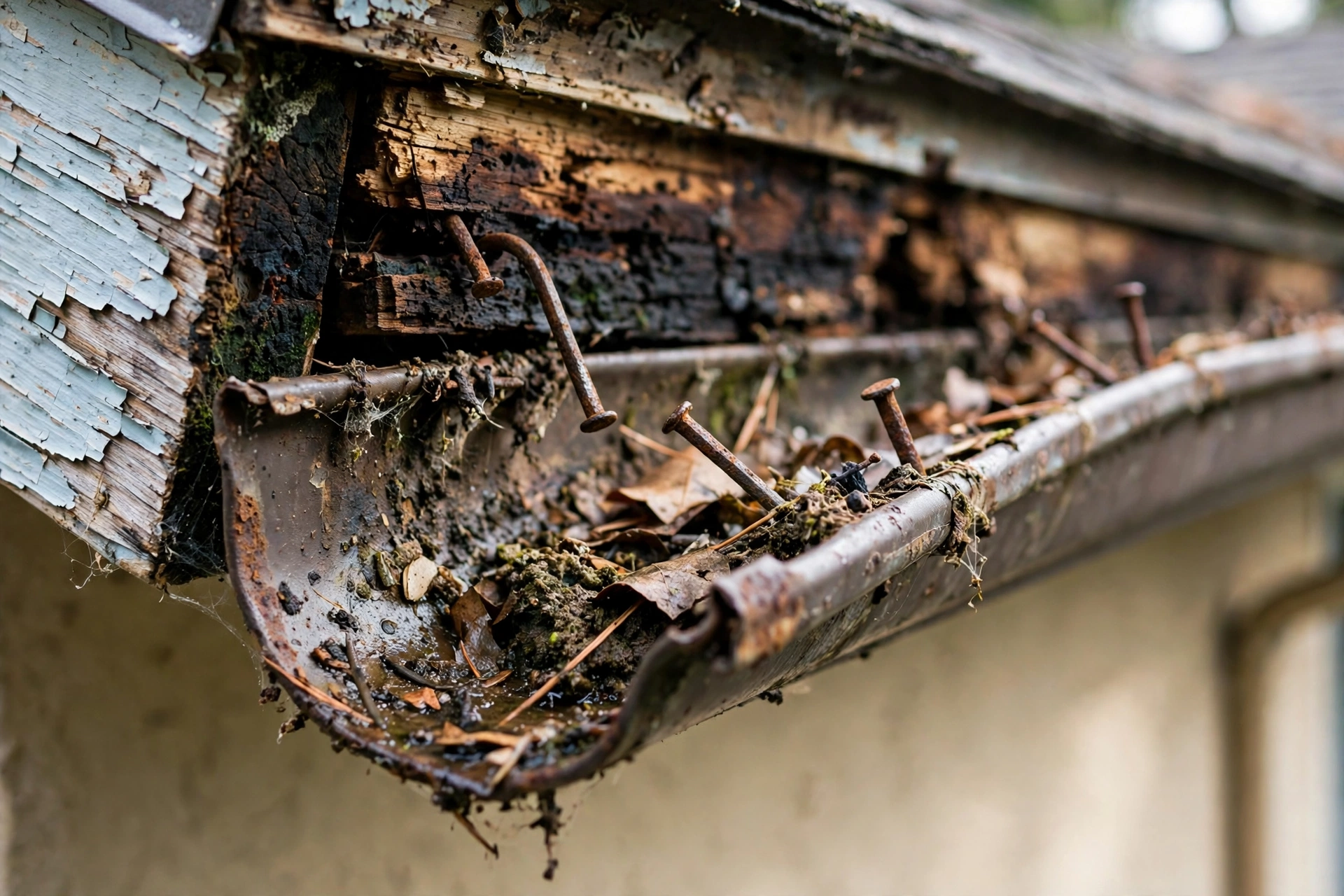
The fascia is the board your gutters hang from. When a clogged gutter overflows, water runs down behind it and sits against that wood, day after day. Paint peels first. Then the wood softens. Then the nails and screws holding the gutter lose their grip, and the gutter starts to sag and pull away.
This is the failure chain behind most “my gutter fell off” calls: it wasn’t the gutter that failed first, it was the wood behind it. Replacing rotted fascia typically runs $900–$6,800 depending on how far the rot spread — and once the fascia is gone, the gutter has nothing left to hang on.
Roof Damage and Ice Dams
A clogged gutter doesn’t just fail at the gutter line. Standing water wicks back under the shingles at the roof’s edge, softening the roof deck underneath. In winter, meltwater that can’t drain refreezes at the gutter line and forms an ice dam — a ridge of ice that forces the next round of meltwater back up under the shingles and into the attic.
Roseville homeowners see this pattern with the valley oaks and pines: a fall of heavy leaf drop, a winter storm, and water that has nowhere to go. The roof itself may be fine — but the edge of it takes the hit every time the gutter is full.
Foundation Damage
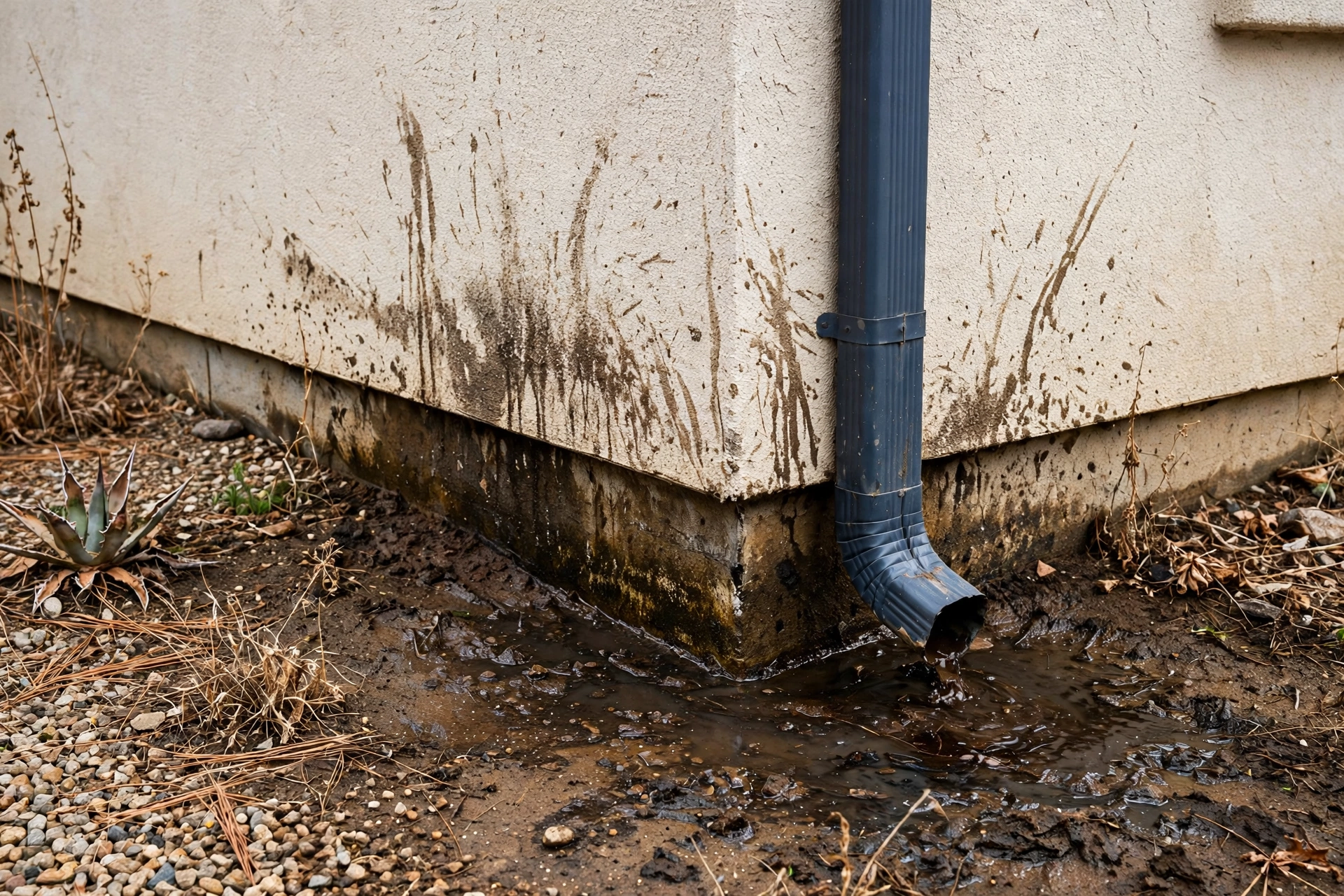
This is the one that turns a skipped chore into a five-figure problem. When gutters overflow, thousands of gallons of rainwater dump straight off the roofline and pool against the foundation instead of being carried away by downspouts. The soil around the foundation stays saturated, and saturated soil pushes inward — hydrostatic pressure — against basement walls and footings.
In expansive soils, that pressure plus freeze-thaw cycling opens cracks. Foundation stabilization commonly runs $5,000–$15,000, and serious structural work can pass $25,000. None of that starts with a foundation problem. It starts with a gutter that wasn’t cleaned.
Basement Flooding and Mold
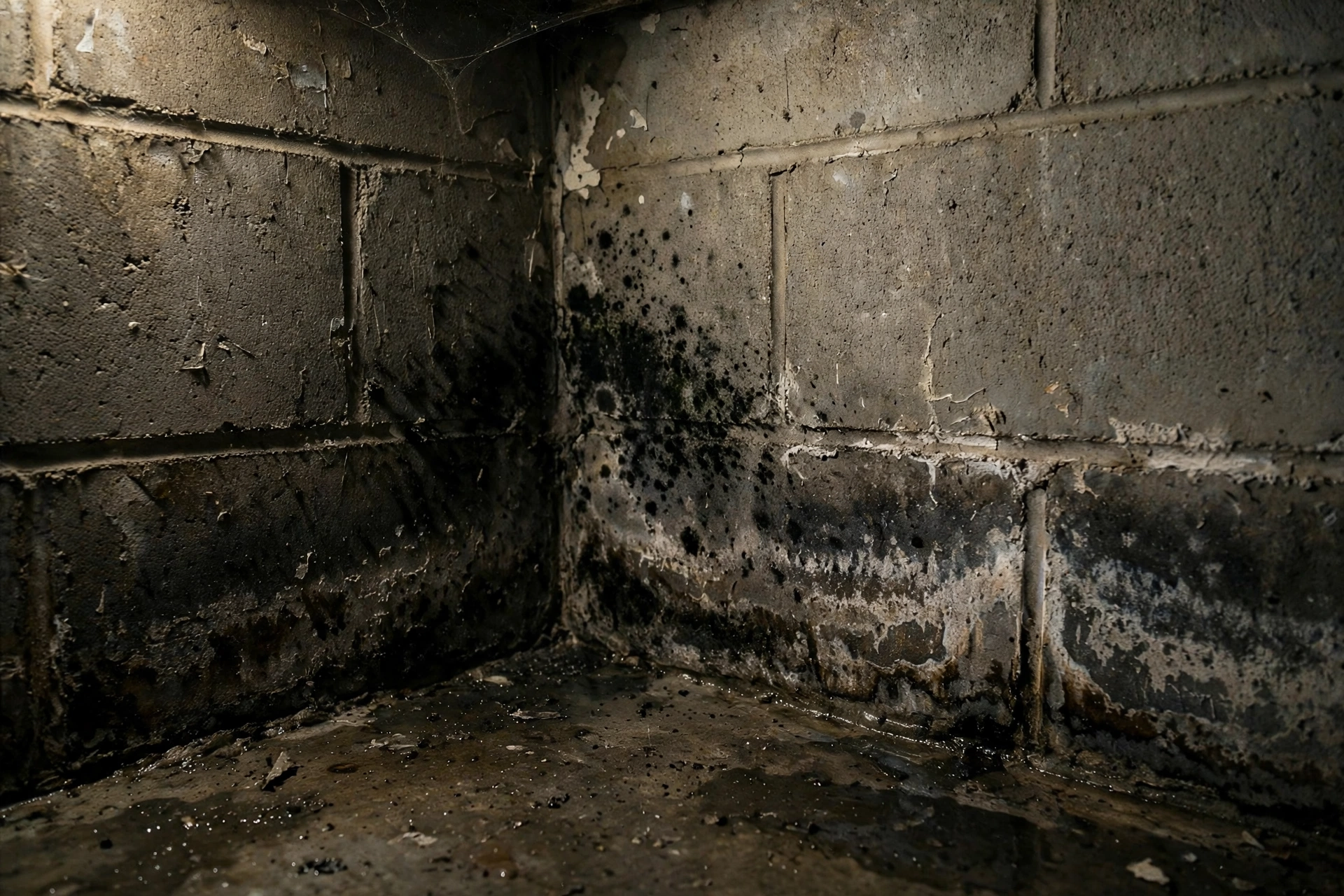
Overflow against the foundation doesn’t stay outside. Water seeps through cracks and joints, and a basement that was dry for years starts taking water in heavy rain. And once moisture is inside, mold follows — often within 24–48 hours of a wetting event, according to EPA guidance on moisture and mold.
A flooded basement is the most common water-damage insurance claim pattern in the country, with claims commonly running $5,000–$15,000. The fix after the fact is waterproofing ($3,000–$10,000) plus whatever the water ruined inside. The fix before the fact is a gutter that drains.
Pest Infestation
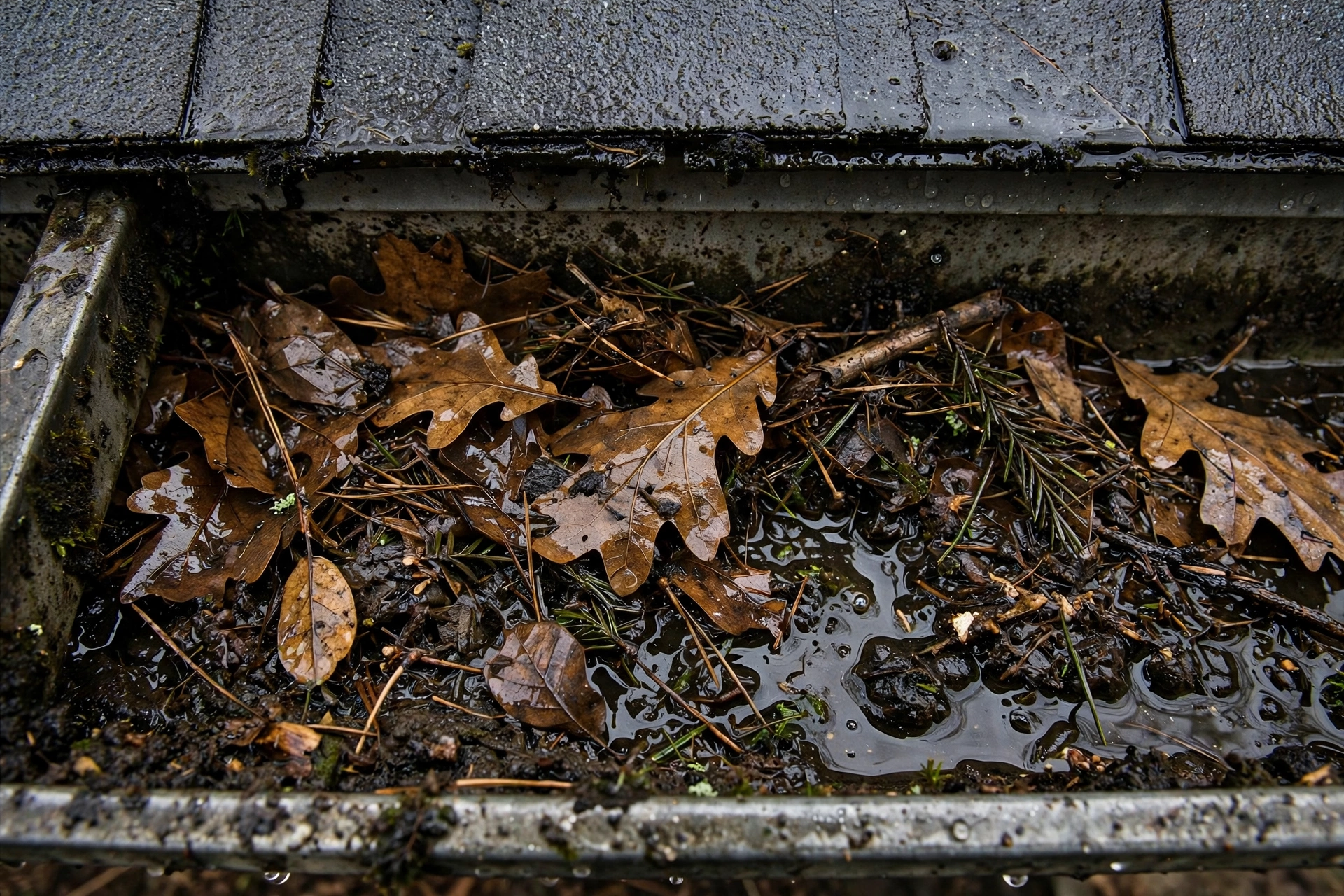
A clogged gutter is a habitat. Standing water breeds mosquitoes. Wet, rotting debris draws termites — and in California, termites love wet wood more than almost anything. Ants follow the moisture lines into the walls, rodents nest in the debris, and birds build in the sheltered trough.
Pest control treats the symptom. The standing water is the cause, and it sits six inches from your roofline.
The Gutters Themselves Fail
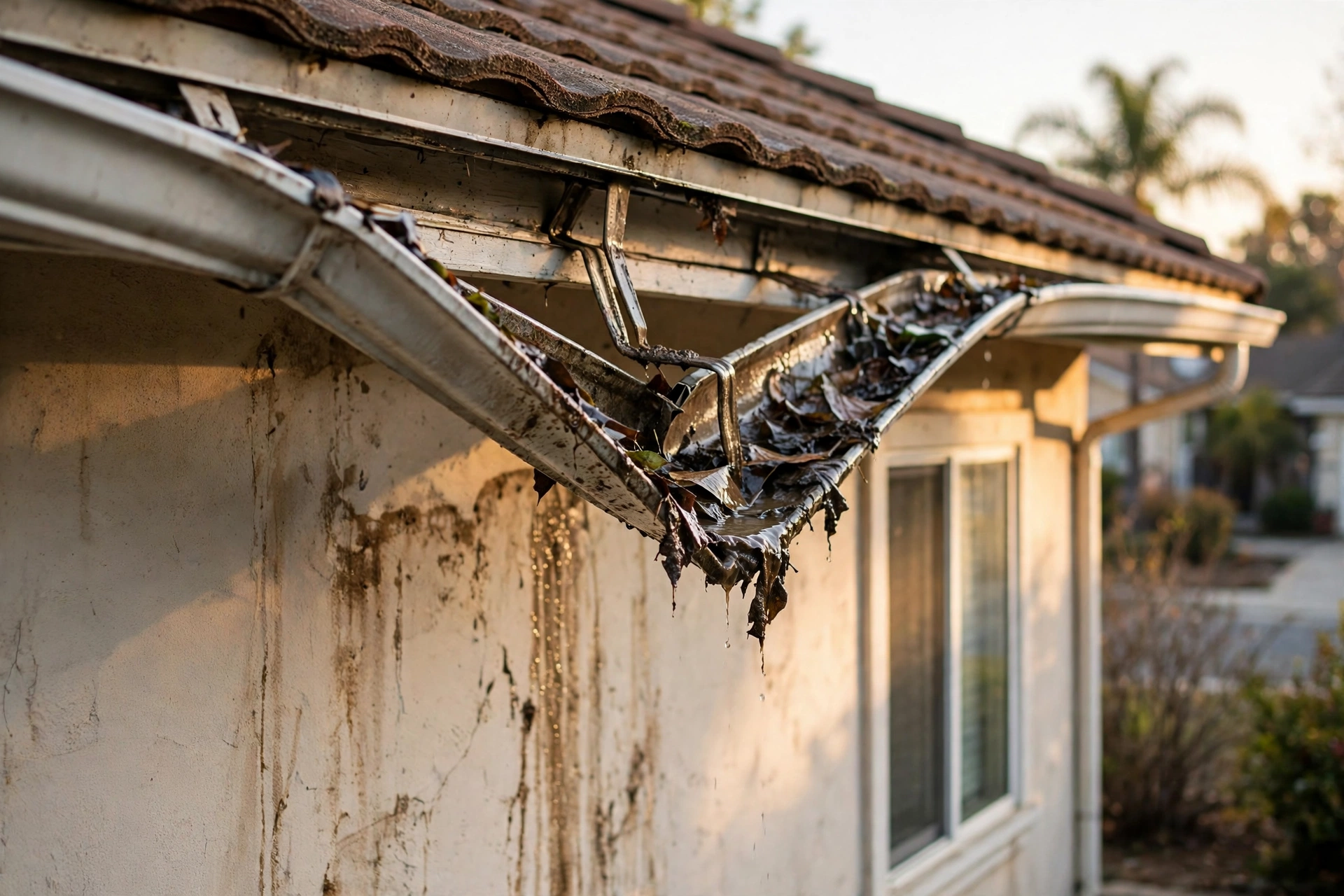
Wet sludge is heavy — about 12.5 pounds per gallon. A 50-foot section of gutter packed with wet debris can carry 625 pounds or more. That’s the weight of a small piano, hanging from fascia boards that are already softening from the water.
When that weight wins, the gutter pulls off, sometimes taking a section of fascia and soffit with it. At that point the repair includes new gutters, new fascia, and new paint — before you even get to the foundation and basement problems the overflow was already causing.
Will Insurance Cover It?
Often, no — and this is the gap most articles skip. Homeowners insurance typically covers sudden, accidental damage: a storm tears off a roof, a pipe bursts. Damage from deferred maintenance — a gutter that was never cleaned, rot that built up over years — is commonly denied as neglect.
That doesn’t mean every claim is rejected; policies differ, and a sudden storm event on top of a maintained system is a different case. But don’t assume the policy will pay for foundation cracks or a flooded basement that trace back to clogged gutters. Check the exclusions section of your policy before you need it, not after.
What Prevention Costs by Comparison
Here’s the math that makes the whole article: a professional gutter cleaning runs around $170 on average nationally (typical range $75–$400). Every repair in this article — fascia $900–$6,800, waterproofing $3,000–$10,000, foundation work $5,000–$15,000 and up — costs multiples of that, and most of them are preventable by the same one or two cleanings a year.
In Roseville, a fall cleaning is the one that prevents all of this: oak and pine leaf drop fills gutters just before the atmospheric-river rains arrive, and a gutter that’s full in October is a gutter that overflows in November. For what a cleaning costs locally, see our cost guide — one line, and the numbers are specific to Roseville.
Frequently Asked Questions
How long can you go without cleaning gutters?
A season or two usually passes without visible damage, but after 1–2 years overflow starts rotting fascia and pooling water at the foundation. By year three, foundation, roof, and basement damage enter the picture. Most homes need cleaning twice a year — once after spring growth, once after fall leaf drop.
Can clogged gutters really damage a foundation?
Yes. Overflow dumps roof water directly against the foundation, saturating the soil. That saturated soil pushes inward on basement walls and, with freeze-thaw cycles, opens cracks. Foundation stabilization commonly costs $5,000–$15,000.
Does insurance cover water damage from clogged gutters?
Often not. Damage from deferred maintenance is commonly denied as neglect. Sudden storm damage is usually covered, but a flooded basement or rotted fascia traced to gutters that were never cleaned is a different case — check your policy’s exclusions.
Can clogged gutters cause mold inside the house?
Yes. Overflow seeps through foundation cracks and joints, and mold can start within 24–48 hours of a wetting event. A gutter that drains keeps the foundation dry, and a dry foundation is what keeps mold out.